
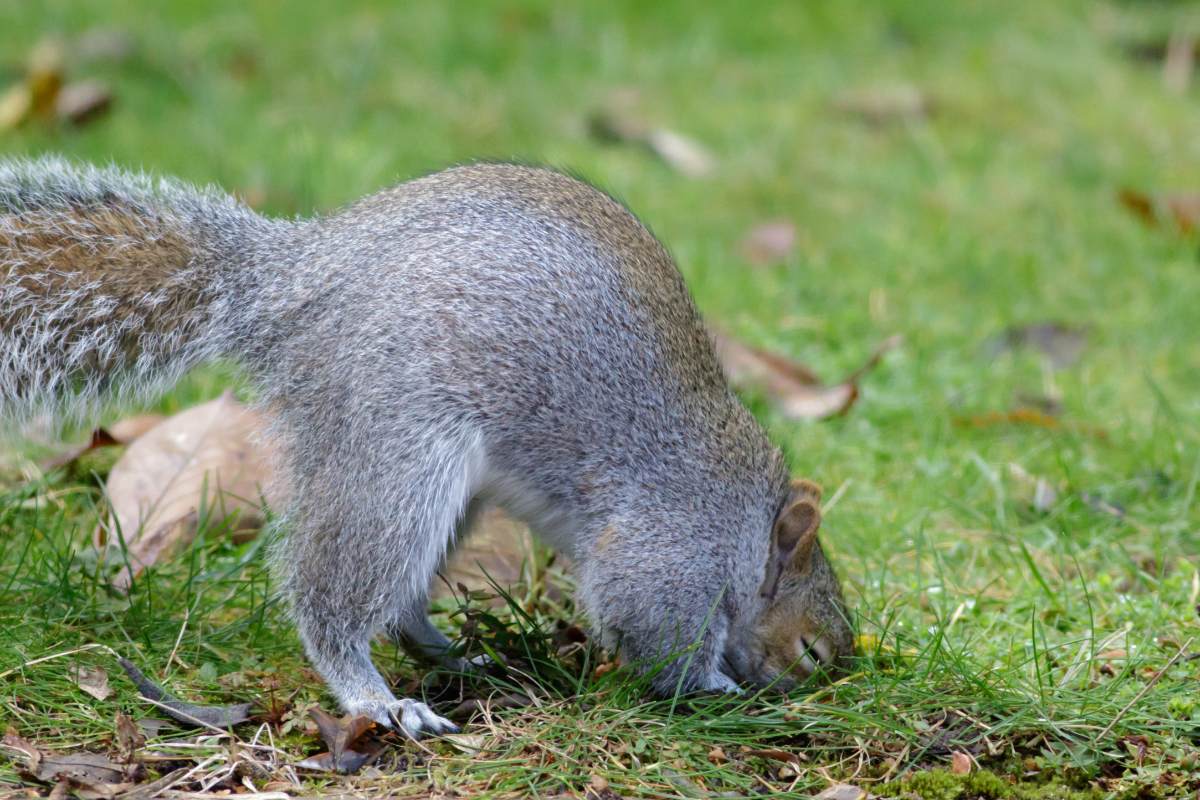
Something is digging in your garden, but you don’t know what? Look for these squirrel gifts: small cone-shaped holes in your lawn, raided bird feeders, and damaged flower bulbs.
Do you need more proof? We’ll walk you through the top 10 signs that squirrels are digging in your yard so you can confirm the culprit without a doubt and start protecting your property from further damage.
1. You see squirrels in the garden
It’s hard to miss the squirrels. Unlike “nocturnal pests like rats, squirrels are bold and active during the day, so you often catch them in the act,” says Sabrina Kong, DVM, a practicing veterinarian at Jules Veterinary Center in Tracy, California.
Typically, you will have tree squirrels or ground squirrels in your garden:
- tree squirrels They sport long, bushy tails and lunge toward trees and structures when frightened.
- ground squirrels They have grayish-brown, mottled, striped or spotted fur, and noticeably shorter tails. When threatened, they hide in underground burrows.
2. Small cone-shaped holes
Why do squirrels dig in your garden? They are searching and burying food. squirrels do small cone-shaped holes (about 2 to 3 inches wide and deep) to store nuts and acorns, turning your lawn into your private pantry.
And we’re not talking about just 1 or 2 holes. Since they store food all winter, you’ll see clusters of these little crevices all over your garden.
“My lawn often looks like a miniature shooting range“Kong says. In California, where he lives, yard damage is often caused by the eastern fox squirrel, a species of tree squirrel.
These small holes are more specific to tree squirrels, which live in tree holes or dreyes (nests of twigs and leaves built high in the tree) and store food on the ground around their nest.
Pro Tip: One way to prevent squirrels from destroying your yard is to install motion-activated sprinklers.
3. Mounds of freshly dug earth
If ground squirrels live in your yard, you may discover it by tripping over one of their mounds.
Ground squirrels live in underground tunnels that are 2 to 4.5 feet deep and 5 to 30 feet long, and serve as nests and food storage areas. His Burrow entrances are 4 to 6 inches wide (large enough to fit in your fist) and often have mounds of freshly dug soil nearby.
Unlike gophers and moles, which pile neat conical mounds over the openings of their tunnels, squirrel mounds are messy and do not cover their entrance.
In addition to the obvious holes and mounds, other warning signs may also indicate their presence:
- Dead grass stains: Tunneling damages roots and creates holes in the soil that allow water to drain away instead of reaching the grass. This leaves dry brown spots on the grass.
- Uneven and bumpy terrain: Your lawnmower sinks and bounces instead of gliding smoothly, a sure sign that the ground has been disturbed.
See related:
4. Mulch and disturbed flower beds
Another sign that squirrels are visiting your garden is disturbed flower beds, where these furry pests like to dig.
“The soft, moist soil makes digging easier,” Kong says. Add the seeds or bulbs you just planted, plus the tender seedlings sticking out, and you’ve got an all-you-can-eat buffet that squirrels won’t be able to resist.
What you will typically see is:
- Mulch piled or mounded next to small depressions and bare, disturbed soil in between
- Uneven depth of mulch along the bed, with some spots almost bare and others mounded
- Chips of wood or bark are ejected outside the boundaries of the bed.
How can you stop squirrels from digging in your flower beds? Try using pinecones as mulch or adding thorny branches over your garden beds. Spreading chili flakes is also recommended, but needs to be reapplied frequently.
See related: How to keep mulch in place
5. Damage to newly planted bulbs
Squirrels will dig up flower bulbs as soon as you plant them. They will eat their favorites, such as tulips and crocuses, leaving only empty holes. You will find the bulbs they don’t like scattered around the garden with bite marks.
The good news? Some bulbs are toxic to squirrels. They won’t touch them and you can use these plants that naturally deter squirrels from digging to protect your flower beds. The most popular are:
- Daffodils
- snowdrops
- grape hyacinths
- Alliums
Pro Tip: Another method to prevent squirrels from digging in your garden is to place chicken wire over the planted area.
See related: Planting bulbs in autumn: what to plant, when and how
6. Damage around bird feeders (and missing food)
A broken or chewed-up bird feeder is a sure sign that squirrels have moved into your neighborhood and are raiding your yard. And so are the seeds scattered on the ground.
Squirrels see bird feeders as free food and will stop at nothing to raid them. They will remove the lids to reach the seeds inside, chew through the plastic corners, or jump onto feeders from nearby trees, roofs, and fences, often causing everything to crash to the ground.
Pro Tip: Bird feeders are squirrel magnets. If you’re wondering how to get rid of squirrels in your garden, start with the feeder: remove it or upgrade to a squirrel-proof model that blocks access to the seeds.
7. Food scraps and hidden stashes
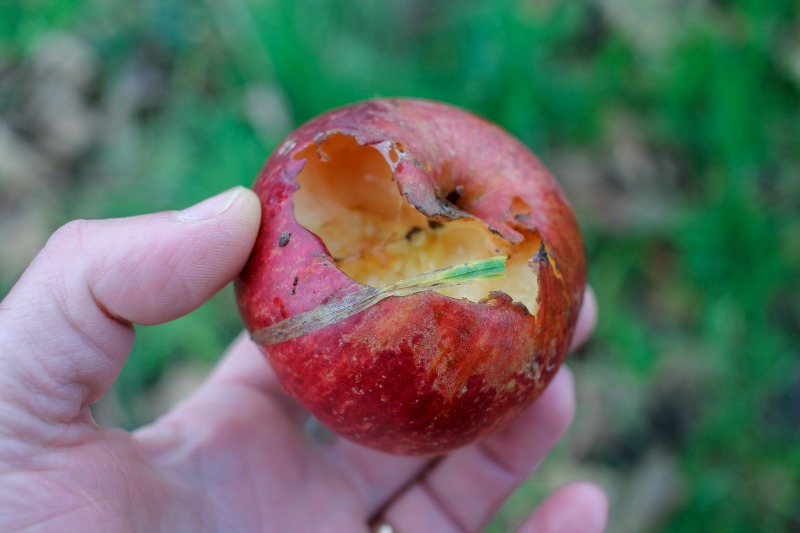
Anyone who has dealt with squirrels knows that they eat messily. If they are foraging in your garden, you will find Food scraps, often under and near trees. – half-eaten fruits, acorn shells and pine cone scales and cores scattered on the ground.
They are also creatures of habit. Once they find a cozy place to eat, they will keep coming back, so It is common to see an accumulation of debris in particular areas. instead of distributing it evenly throughout the garden.
What you’re most likely to find randomly in the garden are partially buried nuts and acorns, since squirrels hide food everywhere.
8. Garden damage in autumn and spring
While squirrels are active year-round, digging is most problematic in the fall and spring. Kong says that between these “two squirrel seasons,” fall is the worst.
“Fall is by far the most destructive, as they are frantically burying nuts for the winter,” Kong says. Where they dig, they usually uproot plants, leaving behind dead grass and small bare patches.
According to Kong, “spring is close behind as they are digging up all that buried treasure and also making new burrows for their young.” During the spring, “soft, moist soil makes digging easier,” and new lawns and gardens are hardest hit. Because? To a squirrel, newly planted areas look like gentle digging with the possibility of finding buried snacks.
In a nutshell: Expect to repair and overseed your lawn more than once a year when squirrels are around.
See related: How often should you overseed your lawn?
9. Peeling bark on tree trunks and branches
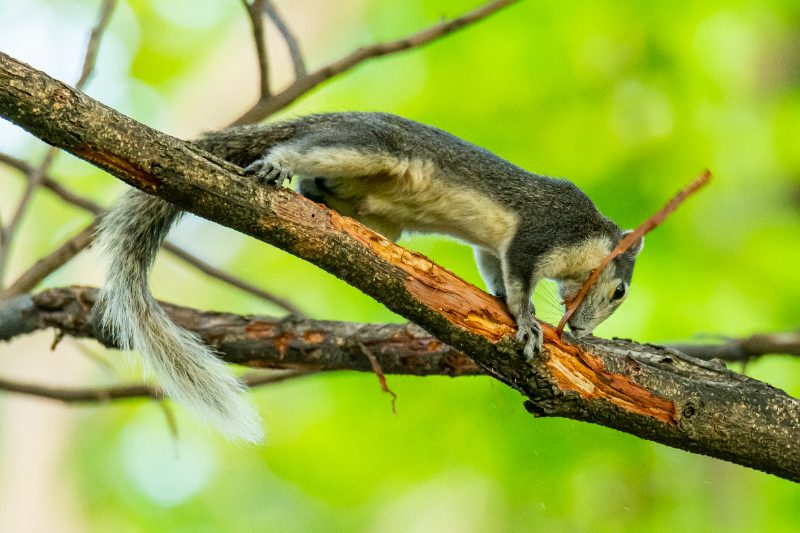
Tree bark is not squirrels’ first choice for snacks, but they make do with it during spring and early summer when crops are scarce. They will remove the outer bark of the trees and eat the inner bark, which is rich in nutrients. According to Ohio State University, Most debarking occurs between April and July.
Unlike ground-dwelling pests such as gophers, deer, and rabbits, squirrels can climb. You may see peeling bark anywhere on a tree, from the base to the top of the trunk and branches. The trees that take the biggest hit? American beech, acacia and maple.
Trees use their inner bark to transport water and nutrients. Barking damages this system and girdling (chewing a ring of bark around the tree) stops the flow completely and eventually kills the tree. The same can happen with bushes.
Pro Tip: Before you catch the culprits, check your local laws. In some states, you will need a permit to trap squirrels. In others, relocating squirrels is illegal.
10. Free tree pruning
The tips of twigs with green leaves scattered on the ground often mean that squirrels are building nests. Squirrels also cut the tips of twigs to sharpen their teeth or have easier access to the nuts and seeds they carry.
Either way, it’s not a natural phenomenon: it’s another sign that you may have squirrels in your garden.
Make Your Yard Hostile to Squirrels
Do you think you have squirrels digging on your property? Take precautions. Hire a LawnStarter professional to trim the trees near your home and keep squirrels out of your attic.
Our professionals can also help with mowing the lawn, leaf removaland bush pruning to keep your garden tidy, clean and less attractive to squirrels and other garden pests.
- “Bark stripping.” Internet Center for Wildlife Damage Management.
- Sabrina Kong, DVM, Julio Veterinary Center in Tracy, California, and staff veterinarian at We love doodles. Personal interview.
- “ground squirrel.” By Niamh Quinn, Human-Wildlife Interactions Advisor, Roger A. Baldwin, Cooperative Extension Human-Wildlife Conflict Resolution Specialist, and Monica Dimson, Digital Media Specialist. University of California.
- “Squirrels barking trees.By Joe Boggs, assistant professor at The Ohio State University.
Main image: Squirrel digging in grassy ground. Image credit: shaft action /AdobeStock

Sinziana Spiridon
Sinziana Spiridon is an outdoor blog writer with a green thumb and a passion for organic gardening. When she’s not writing about weeds, pests, soil, and growing plants, she’s tending to her vegetable garden and the beautiful strip of grass in her front yard.